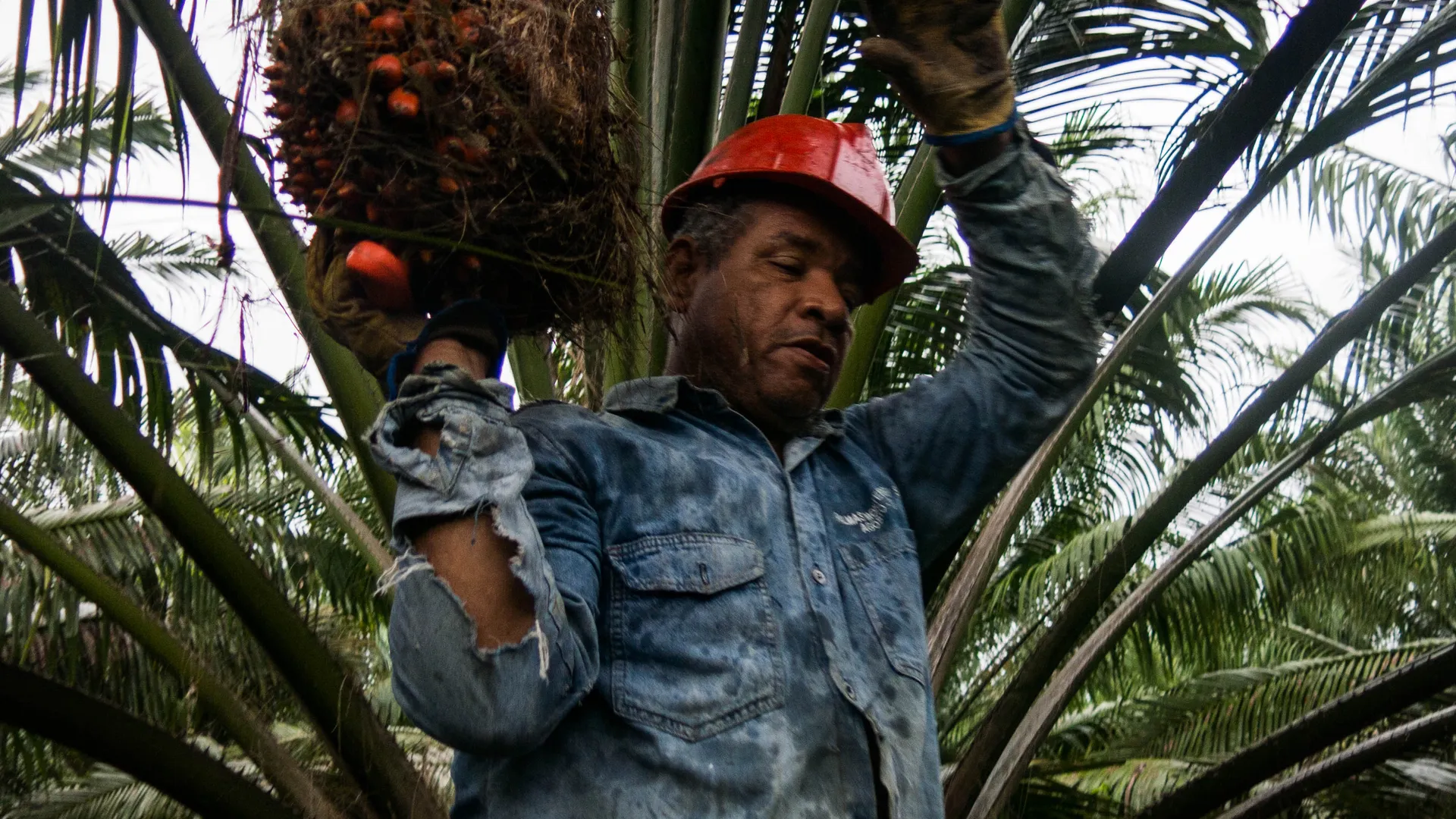
This second round of participatory monitoring, involving 430 workers from Guatemala and Honduras, offers a unique insight into the real implementation of RSPO’s Principles and Criteria, as well as into the state of fundamental labor rights such as living wage, freedom of association, occupational health and safety, and the elimination of forced labor.
A Participatory Tool that Amplifies Workers’ Voices
The Fair Work Monitor is a tool developed by CNV Internationaal to measure working conditions from the workers’ own perspective. Its participatory methodology strengthens collective action and provides valuable insights for social dialogue, collective bargaining, and due diligence processes across the global palm oil supply chain.
In this edition, the monitoring took place between March and May 2025 in the main palm-producing regions of Guatemala (Sayaxché, Petén) and Honduras (Atlántida, Cortés, and Yoro).
Key Findings of the Report
The results show important progress, but also persistent challenges.
- In Guatemala, 99% of agricultural workers do not earn a living wage and 25% lack a formal contract. Barriers to social dialogue and unionization remain significant.
- In Honduras, 100% of surveyed workers have a written contract and 90% report the presence of unions, although 40% say they work under pressure or coercion due to fear of dismissal.
In both countries, most workers are aware of the RSPO certification, yet its effective implementation still faces limitations. Training on occupational health and safety remains insufficient, especially for subcontracted and field workers.
The Importance of Collective Action
The Fair Work Monitor findings highlight that collaboration among workers, companies, and organizations such as RSPO is essential to building fairer, more resilient, and inclusive supply chains.
Only through effective social dialogue and strong collective agreements will it be possible to ensure decent living and working conditions for everyone employed in the palm oil sector.
Towards a Fairer and More Sustainable Palm Oil Chain
Participatory monitoring not only identifies challenges but also points the way toward continuous improvement. CNV Internationaal proposes institutionalizing regular data collection through the Fair Work Monitor as a permanent mechanism for monitoring and collective learning.
This information provides a solid foundation for due diligence policies, union strengthening, and the development of transparent labor relations within the sector.


