The impact of the energy transition on labour rights
Today’s global mining industry finds itself in the middle of a drastic energy transition. Climate change pushes for important steps towards a more environmentally conscious and sustainable economy. Large fossil fuel buyers, such as European countries and multinationals in the energy mining sector, have committed themselves to lowering their carbon emissions, which should lead to important changes in the demand for strategic minerals extracted from Latin American countries.
Notwithstanding, the demand for these fuels is currently high because of the ongoing critical energy security situation in Europe. As a result of this, high economic gains are being generated that should include energy transition investments to mitigate the impact of so many years of extractivism.
In the context of this transition, it is important to hear the miners in order to ensure a just global energy transition. Listening to what they have to say means having workers and trade union organisations present at all times when having conversations with governments, companies and other actors in the mining and energy sector.
Main findings
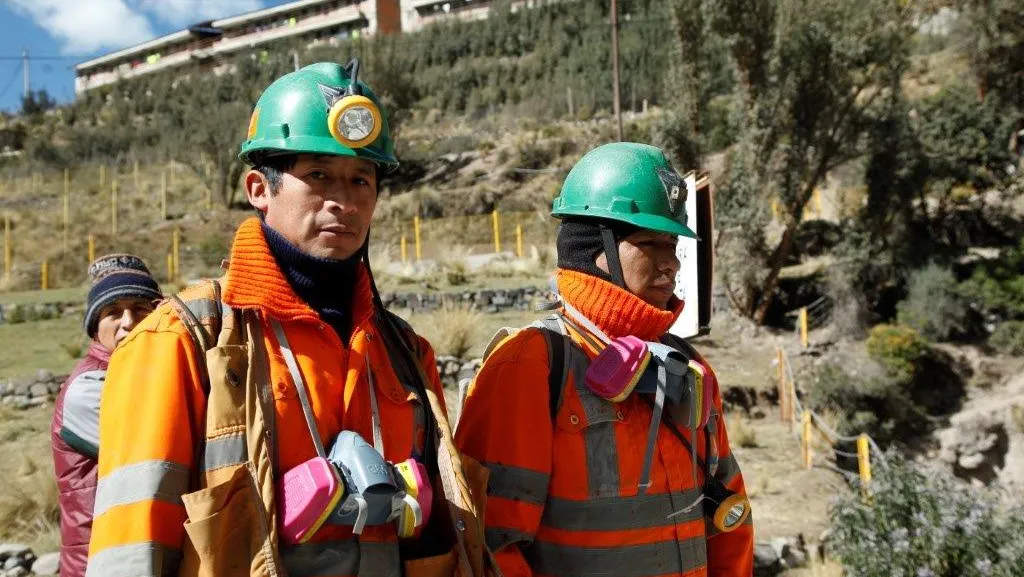
The participatory digital monitoring for the mineral supply chain collected the opinions of Latin American mining sector workers for the first time through an online survey administered between March and July 2022. Out of a total of 367 workers, 35 were from Bolivia, 129 from Colombia and 203 from Peru.
The results of this Fair Work Observatory show the vulnerability of workers in the mining sector and also demonstrate the urgency of guaranteeing workers' rights especially in a context of increasing demand for minerals, such as the energy transition.
- Social dialogue
Most surveyed workers were unionized, and many reported collective bargaining agreements (CBAs) and grievance mechanisms. However, relations between workers and employers were seen as worsening, despite union-led dialogue. Strikes, especially in Colombia and Peru, were common, and over two-thirds of workers said they didn’t feel free to report issues. - Minimum and living wages
14% of workers earned less than the living wage in their countries, and 4% (from Peru and Bolivia) earned below the minimum wage. In Peru, 20% earned less than the living wage, and in Colombia, 6%. While most workers earned above the living wage benchmark, over half reported a worsening financial situation in the past three months. - Trade union freedom
Most companies had union presence, and workers valued this. However, union-busting—such as dismissals and discouraging membership—was reported, especially in Colombia and Peru. Though 90% mentioned existing CBAs, two-thirds said employers failed to comply with them. - Forced labour
According to the ILO, pressure to work overtime to meet basic income needs can indicate forced labour. 60% of workers did overtime; 31% said it was forced, and 32% said it was financially necessary. Overtime pay was inconsistent: 33% never received it, 48% sometimes, and 19% always. In Bolivia, 49% never received overtime pay; in Colombia, 39% always did. - Child labour
Child labour was reported in Bolivia and Peru, with minors under 14 seen accompanying parents in mines. 25% of those noting child labour said the children were under 14. Even if not formally employed, the presence of minors raises concerns for their health, safety, and education. - Employment security
Employment contracts were common, though men had them more often than women. Contract coverage was highest in Bolivia, lowest in Peru, where over 66% didn’t receive a copy. Half of all workers reported not receiving their contracts. Additionally, 37% were outsourced, with no direct link to the main company—indicating informal conditions even in large-scale mining. - Gender
Women’s participation in mining and unions was low across Bolivia, Colombia, and Peru. Nearly a third of surveyed women and one LGBTI+ worker reported gender-based discrimination or harassment. Women were less likely to have employment contracts and worked more overtime than men.


