Main findings
Out of a total of 840 participants in this survey, 113 were women and 727 were men.
The approach with which the survey was conducted with the participants was centered on the ILO core conventions on decent work. The main conclusions obtained for each of them are:
Social dialogue
The vast majority of workers surveyed reported the existence of participatory mechanisms that, in their companies, facilitate social dialogue. The rates vary between each of the participating countries. Social dialogue does not occur in the same way between direct and outsourced workers as the latter do not have full access to these participation mechanisms. The work we now face is to find ways to improve social dialogue so that it includes everyone who works in the sugar industry.
Trade union freedom
The possibility for social dialogue to exist is directly related to the work developed by the unions in each of the companies that are part of this observatory. They have made freedom of association a reality in many of these places. However, there is still a significant gap between sugar workers who have a direct contract with the company and those who are outsourced. The latter have fewer possibilities to join organizations that fight for their rights.
Occupational health and safety
The survey also shows mixed conclusions regarding issues of occupational safety and health. Most of the workers surveyed confirmed the existence and effectiveness of PPE (personal protective equipment). However, an increase in the number of occupational accidents was also reported. This survey is presented as a first overview and exposes the need to delve deeper into the health and safety situations faced by sugar workers.
Gender equality
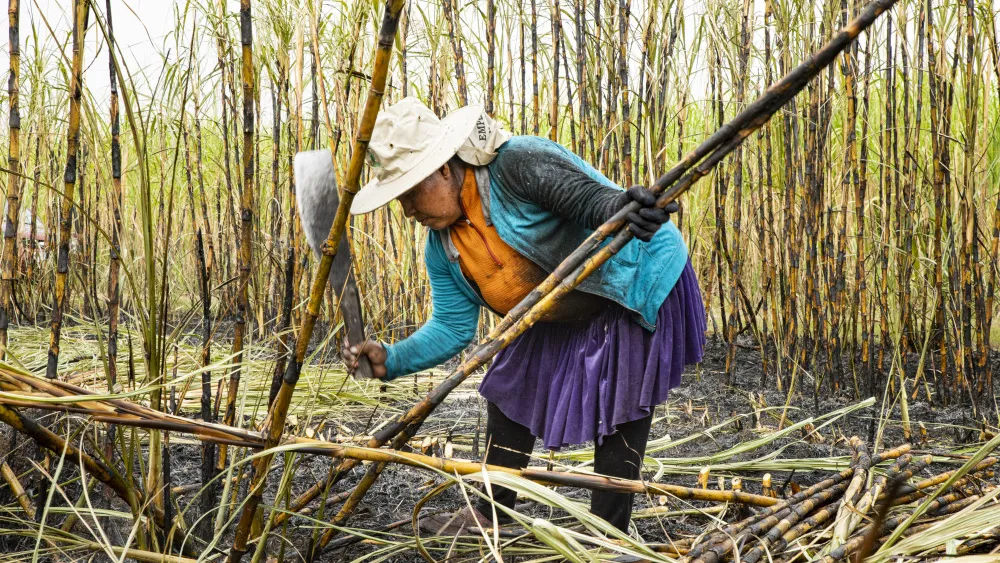
The data collected in this study shows that women in the Latin American sugar sector have significantly lower participation rates in both the workforce and in unions.
The main findings also suggest precarious situations for women sugarcane workers in regard to low wages, informal work, and being associated with a spouse's work, especially if they are working as part of a nuclear family. Moreover, women are often additionally hindered by the burden of having to perform unpaid care work. In Latin America this task falls almost exclusively on women.
Living wage
With a high tendency towards piece-rate or piece-rate pay, the general perception of workers is that their wages are below the living wage defined for each of their countries. This situation is much more prevalent among workers in the productive stages of planting, field maintenance, harvesting and transportation.