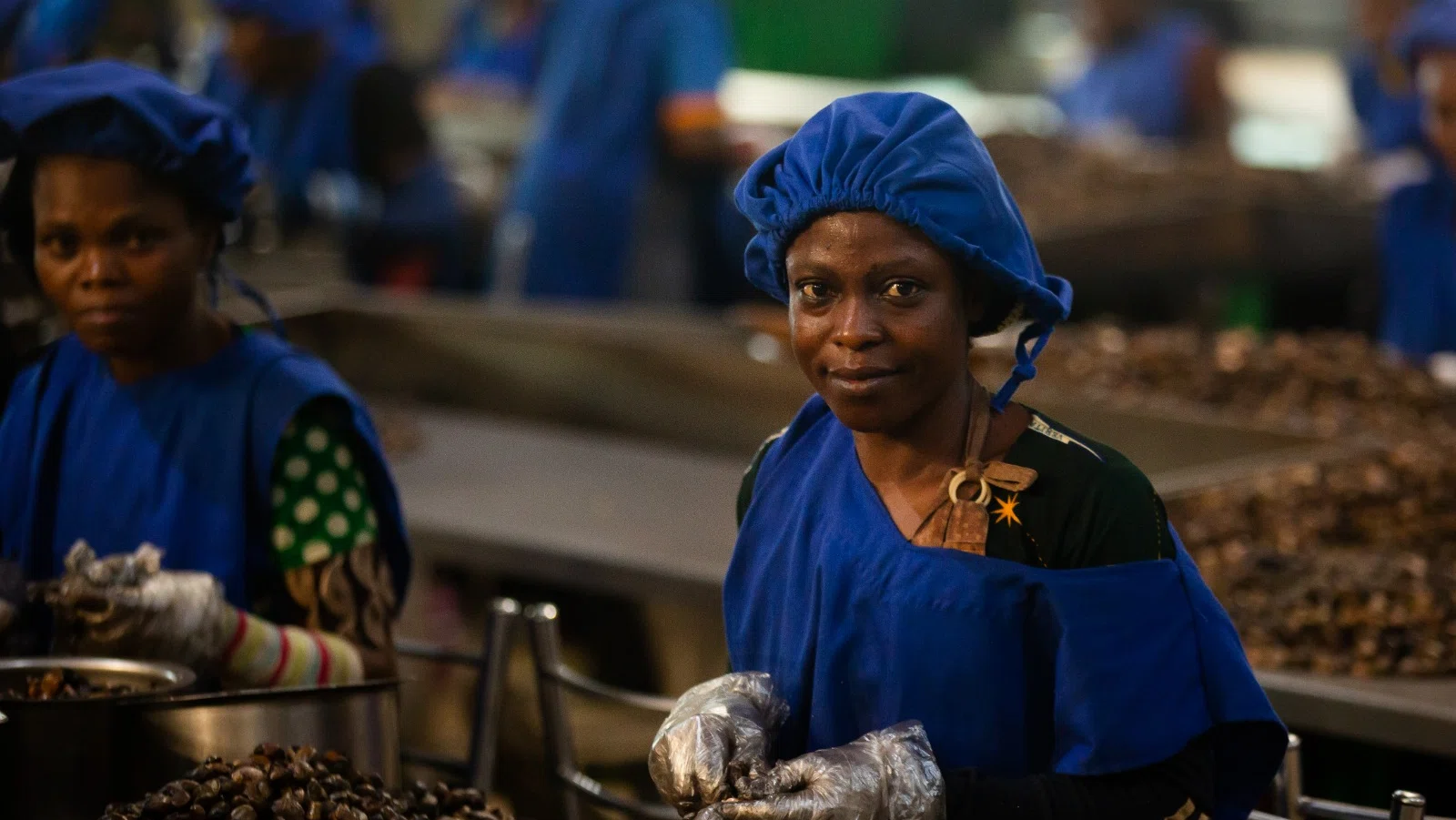
Côte d’Ivoire: From talking about employees to talking with employees

When social dialogue becomes a strategic choice in the cashew sector

The cashew sector is one of Côte d’Ivoire’s most important economic sectors. At the same time, this sector is characterised by informal labour relations, seasonal peaks in workload and a limited degree of structured social dialogue. In many companies, tensions are only discussed once they have already escalated.

Cashew processor CILAGRI Cajou decided to take a different approach: investing in social dialogue as a preventive tool to build trust and avert conflicts.

The turning point

In March 2025, the managing director of CILAGRI Cajou took part in a regional training course on sectoral social dialogue in Cotonou, organised by CNV Internationaal and PUM as part of the PCS Dialogue@Work programme.

An important insight emerged during the training. The managing director realised that effective social dialogue is only possible when employees actively participate in the discussions that affect them.

I realised that we cannot talk about employees, but must talk with them. If we take social dialogue seriously, they must also have a seat at the table.

- Cynthia Niamoutie, managing director of the cashew company CILAGRI CAJOU

Driven by this conviction, she took immediate action. She decided that the company’s chief employee representative should, after all, take part in the training. The following day, he travelled from Abidjan to Cotonou at the company’s expense to join the group.

According to a programme adviser at CNV Internationaal, this sent a powerful signal: “Decisions like this show that an employer not only understands the concept, but also puts it into practice straight away. This is exactly the sort of leadership that lends credibility to social dialogue.”

From insight to action

Upon returning to Côte d’Ivoire, the initiative did not stop at good intentions. CILAGRI Cajou decided to actively disseminate the knowledge gained within the company.

The company organised an in-house training session on social dialogue for employee representatives, team leaders and HR staff. It was notable that this session was not organised in response to a conflict, but rather to prevent future tensions.

During a role-play scenario, an employee raised a familiar situation from a busy production period. In a safe environment, employees and management were able to speak openly about expectations, challenges and possible solutions.

Together, the participants developed a simple action plan comprising:

  • regular consultation sessions
  • clear points of contact
  • accessible ways to raise concerns
  • agreements on how to follow up on feedback from the shop floor

Normally, we only speak out about this sort of thing once we’re already feeling frustrated. This time, however, we were able to calmly explain what we’re experiencing in the workplace, and people really listened.

- Employee at the CILAGRI Cajou cashew processing plant

Change

The intervention led to changes in attitude and behaviour on both sides of the table.

Employees gained greater confidence in sharing their experiences and concerns. At the same time, management developed a better understanding of how structured social dialogue can contribute to a stable and productive working environment.

A shared understanding emerged within the company that social dialogue is not only a technique for resolving conflicts, but also a tool for preventing them.

Results

The initial results are clearly visible:

  • employees feel more heard and involved
  • employee representatives have greater knowledge and confidence to represent employees’ interests
  • management has practical tools and skills to identify tensions at an early stage
  • mutual trust between management and employees has been strengthened
  • social dialogue is increasingly seen as part of good corporate governance.

For me, this isn’t an extra obligation, but an investment. You build a sustainable business with employees who are listened to, trained and engaged.

- Cynthia Niamoutie, managing director of the cashew company CILAGRI CAJOU

Why this is important

The example of CILAGRI Cajou shows how change can begin with a single insight and a single concrete decision. An employee representative’s participation in a training course ultimately led to new ways of working together within the company.

This experience confirms three key lessons:

  1. sustainable social dialogue requires leadership and conviction;
  2. the direct involvement of employees is essential for building trust;
  3. regional training courses have the greatest impact when companies actually put the lessons into practice.

Looking ahead

Within the PCS Dialogue@Work programme, the next challenge lies in scaling up this approach. By sharing practical examples, such as that of CILAGRI Cajou, with other companies and producer cooperatives in the cashew supply chain, social dialogue can continue to develop as a tool for sustainable business practices and respect for labour rights.

Talking about labour conditions in horticulture

Social dialogue

The story of CILAGRI Cajou shows that social dialogue is most effective when used as a preventive measure. By actively involving employees, the company builds greater trust, fosters better cooperation and creates a more stable working environment. In doing so, CILAGRI Cajou demonstrates that respect for employees’ rights and good corporate governance can go hand in hand.

More about social dialogue