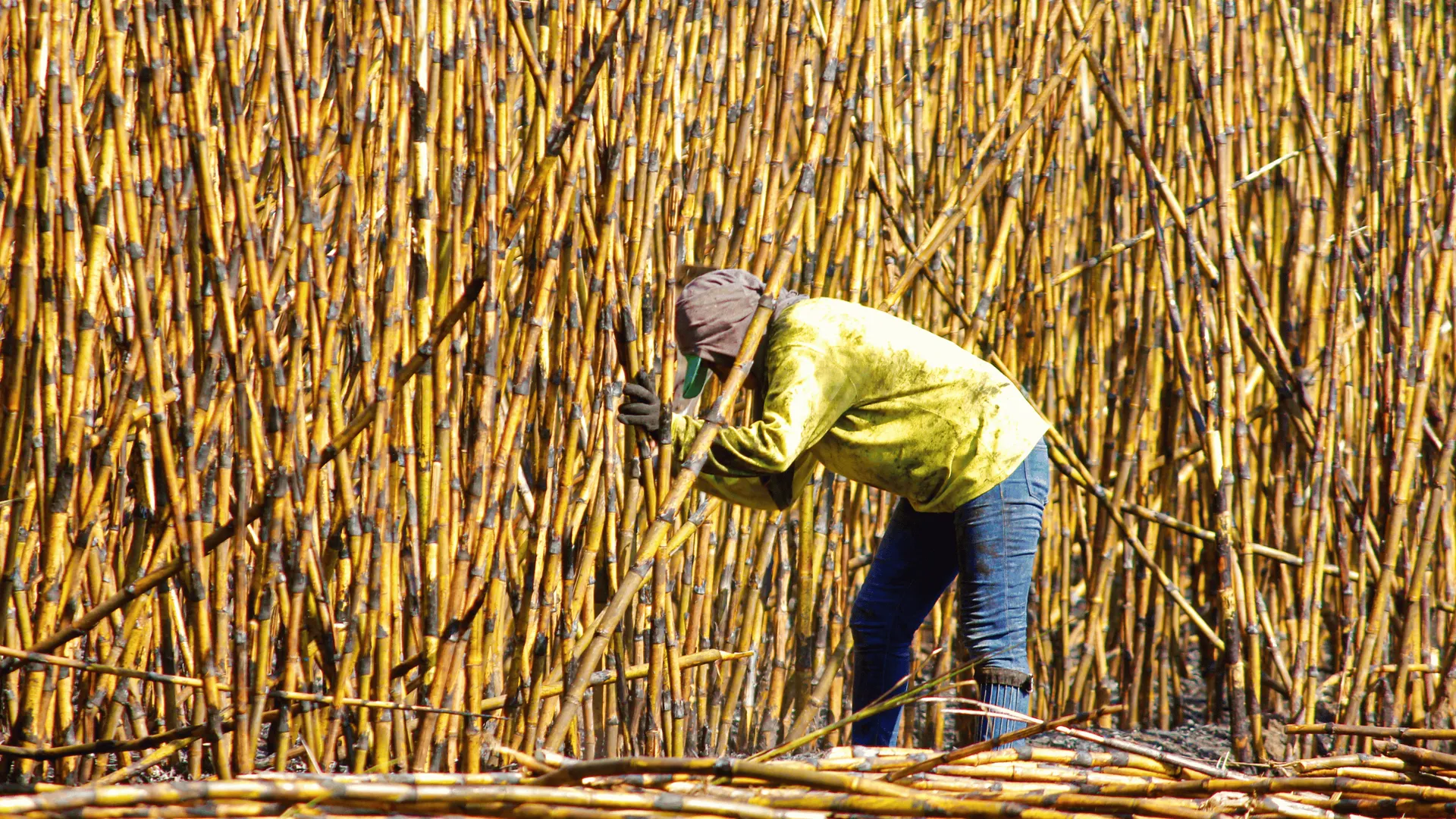
Sugarcane worker

Colombia: From a Hidden Reality to 1,527 Votes from Sugarcane Workers

A sector where not everyone’s voice is heard

In Colombia’s sugarcane-growing regions, such as Valle del Cauca, Cauca, Risaralda and Caldas, thousands of people work every day in the agro-industrial sugar supply chain. Yet the working and living conditions of many workers often remain out of sight. Informal workers and women, in particular, are rarely included in official figures, even though they are often the most vulnerable.

To shed light on this reality, CNV Internationaal, in collaboration with the trade union SINTRAINAGRO, launched an ambitious initiative in 2025 as part of the Observatorio del Trabajo Justo en América Latina: participatory digital monitoring carried out by the workers themselves.

The premise was simple yet powerful: the most reliable information about working conditions comes from the people who experience those conditions every day.

Unexpected growth

What began as a new method of collecting data grew into a movement. By way of comparison: in 2024, 471 sugarcane workers took part in a regional monitoring round. In 2025, in Colombia alone, this number rose to no fewer than 1,527 participants.

This result was achieved by just fourteen trained trade union members. As so-called ‘enlaces’, they travelled through the various regions to support workers in using KoboCollect, a digital application that allowed participants to share their experiences anonymously.

What ensued exceeded all expectations. Workers helped one another to download the app, complete questionnaires and explain the purpose of the monitoring. Trust spread from colleague to colleague.

The monitoring thus became more than just a survey. It became a collective effort by workers who wanted their stories to be heard.

Courage in difficult context

That success was anything but a foregone conclusion. SINTRAINAGRO has been operating for many years in an environment where trade union work can involve intimidation, threats and risks. For many workers, discussing their income, employment contract or family situation does not feel inherently safe.

Nevertheless, hundreds of workers decided to take part.

The trained trade union members made a special effort to reach precisely those groups that often remain out of the picture, including women and those in informal employment. In some areas, this meant travelling to remote locations and engaging in conversations under difficult circumstances.

It was precisely this that gave the information gathered its particular value. Behind every completed form was a person who chose to make their reality visible.

Wat de monitoring zichtbaar maakte

Voor veel deelnemers was het confronterend om de resultaten te zien.

‘It was wonderful, but frustrating at the same time. We met people whose working conditions were far worse than ours. Some earn as little as 20,000 or 30,000 pesos a day and don’t even make the minimum wage. Thanks to the monitoring, these people were finally heard.’

- Participating worker

Another participant emphasised how the information had strengthened the trade union:

‘We uncovered circumstances that had always remained hidden. Now we can share those experiences and use them to bring about improvements.’

- Participating worker

Trade union representatives, too, immediately recognised the added value:

‘Through this monitoring, we have been able to uncover many irregularities in employment relationships that would otherwise have remained hidden.’

- Trade union representative

The change

The biggest change lay not only in the data, but in the people behind it. Employees were no longer seen solely as respondents, but as co-researchers. They collected information themselves about their living conditions, income and employment rights, thereby bringing to light what had previously remained hidden.

At the same time, the process strengthened the trade union. New groups of workers were reached, mutual solidarity grew, and a stronger foundation for social dialogue and advocacy was established.

What began as a digital survey evolved into a tool for raising awareness, organisation and collective action.

Why this is important

SINTRAINAGRO’s experience shows that participatory digital monitoring can be much more than just a research tool. It demonstrates that:

  • workers themselves can collect reliable and valuable information
  • digital monitoring also works in vulnerable and high-risk contexts
  • trade unions with limited resources can achieve a wide reach
  • hidden issues relating to a living wage and working conditions are brought to light
  • participation in research can contribute to organisational strength and collective action
  • Conclusion

    The story of SINTRAINAGRO shows what happens when workers are given the opportunity to document their own reality. From 471 to 1,527 participants. From hidden stories to visible facts. From individual experiences to a collective voice.

    In 2025, this process proved that change does not always begin with policy or negotiations. Sometimes it starts with something simple: workers telling their own stories – and ensuring that they are listened to.