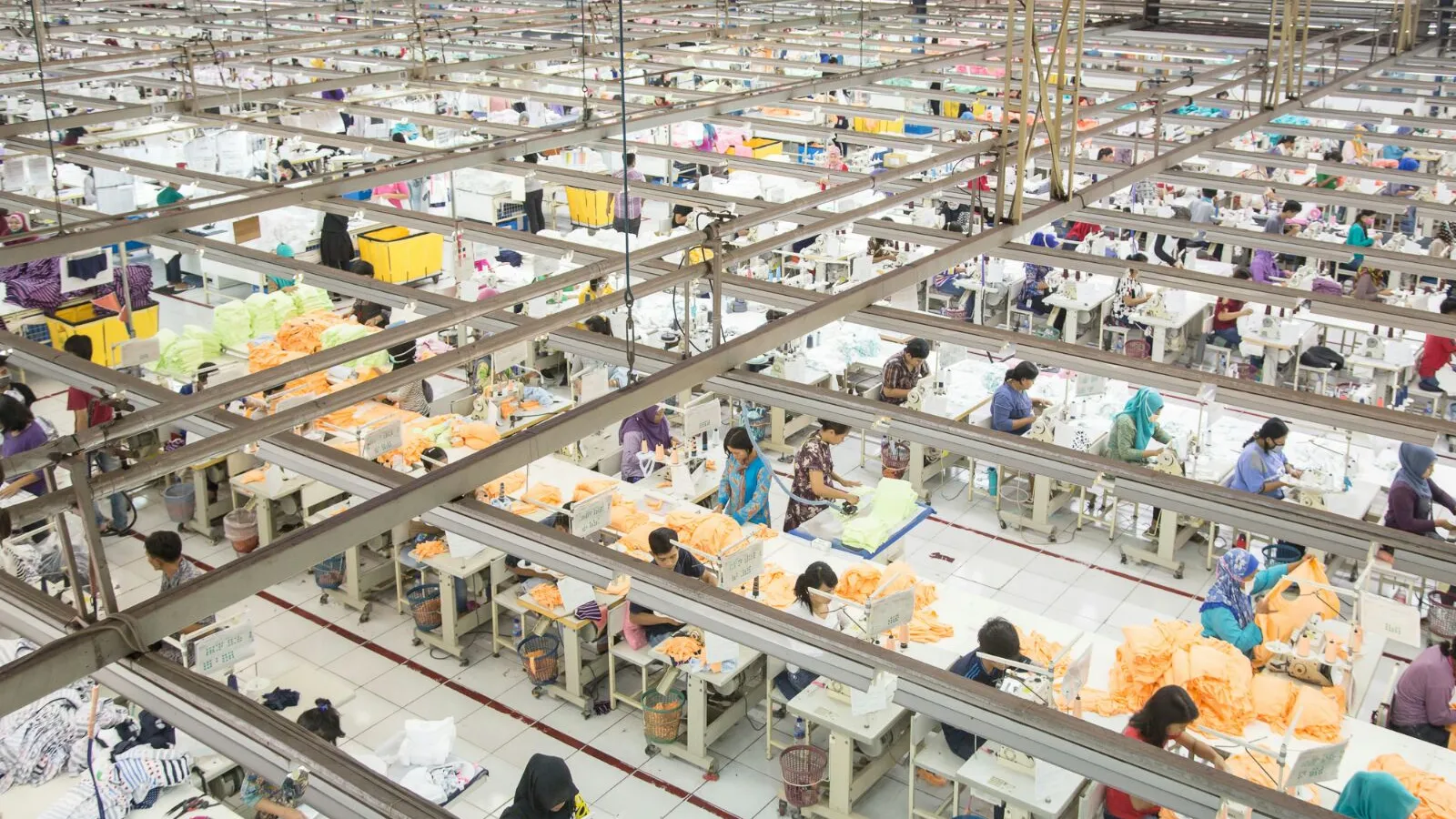
Textile factory in Indonesia

Global crisis, shared responsibility

Share risks fairly and choose responsible procurement in times of war and energy crisis

The war between Iran and the United States and the subsequent energy crisis painfully show how vulnerable global production chains are. CNV Internationaal calls on Dutch clothing brands to take responsibility and ensure ethical sourcing practices. What is a cost increase for companies should not become a livelihood crisis for garment workers in Asia. Crisis should never be an excuse to tear down labour rights

Responsible sourcing is not a marketing choice, but a prerequisite for decent work in global garment chains. In addition, responsible business practices ensure resilient supply chains, which is also very important for companies in times of crisis.

Crisis already hitting textile sector

Rising energy prices, more expensive raw materials and disrupted logistics are affecting businesses worldwide. The Netherlands and Europe are taking protective measures for households and businesses at this end of the chain. In manufacturing countries like Cambodia, such safety nets are largely missing.

Garment factories there operate on low margins and therefore have limited financial buffers. When garment brands shift, change or cancel their orders, the consequences are directly passed on to workers.

The costs of the crisis slide down the chain - to people who could barely make ends meet even before.

Impact on garment workers in Asia

Programme coordinator for the textile sector Isabelle de Lijser of CNV Internationaal and our local union partners see that the impact on workers is rapidly increasing:

Rising fuel costs are hitting workers hardest but food prices have also skyrocketed. While the cost of living continues to rise, wages are falling. Garment workers are working fewer and fewer hours or are fired. Anyone who says anything about it is the first to be fired.  Due to fuel shortages, factories are shutting down production without wage payment or severance pay. Wages are paid too late, too low or not at all.

Isabelle de Lijser, Programme Coordinator, CNV Internationaal

The position of workers becomes increasingly precarious due to layoffs, shorter working weeks, and informalisation of work. As a result, it becomes increasingly difficult to earn a living wage.

Migrants face an additional risk of loss of income and exploitation. This situation increases global inequality and undermines the labour rights of workers in the garment industry that is essential to the economy in countries such as Vietnam, Bangladesh and Cambodia.

Support now is also in the interest of businesses

Supporting production sites in times of crisis is not only a matter of solidarity, but also of sound entrepreneurship. Brands that keep their suppliers afloat now invest in stable production, skilled workers and reliable long-term supply security.

By paying on time, charging fair prices and not passing on costs, companies avoid bankruptcies, production stoppages and loss of expertise. This reduces the risks of disruptions, reputational damage and long-term costs in the future.

Responsible procurement is thus not a cost, but a strategic investment in resilient and sustainable chains.

What Do We Expect from Clothing Brands?

Clothing brands play a crucial role and can make a real difference during times of war and humanitarian crisis. Responsible purchasing practices are more important than ever. In situations of armed conflict, or where there is a heightened risk of serious wrongdoing, the OECD Guidelines for Multinational Enterprises state that companies should carry out enhanced due diligence to identify, prevent and address adverse impacts on workers and supply chains.

CNV Internationaal calls on clothing brands to:

  1. Continue engaging with trade unions in Europe and producing countries to understand and address the impact of war on workers.
  2. Maintain or establish dialogue with suppliers regarding the effects of the conflict on business operations and supply chains.
  3. Pay all orders in full and on time, even when delays or temporary production stoppages occur.
  4. Avoid cancelling orders, reducing agreed prices or misusing force majeure clauses in supplier contracts.
  5. Ensure that additional crisis-related costs, such as increased energy, transport or raw material expenses, are not passed on to suppliers.
  6. Adjust purchasing prices where necessary so that wages can increase in line with inflation and rising living costs.
  7. Build and maintain long-term relationships with suppliers and avoid sudden relocation of production.
  8. Promote social dialogue among employers, workers and governments regarding the impact of the crisis, and contribute to sustainable solutions wherever possible.
  9. Protect workers in cases of factory closures, including ensuring wage payments and redundancy compensation where applicable.
  10. Recognise that crises should never be used as a justification for weakening or undermining labour rights.

CNV Internationaal calls on European governments to:

  1. Include clear, specific guidelines on crisis situations for responsible procurement in the guidelines for the European due diligence law CSDDD.
  2. Actively support social dialogue in international chains.
  3. Support sectoral cooperation initiatives so that companies can learn from each other what responsible procurement looks like in practice.
  4. Ensure coherent energy, trade and industrial policies that do not indirectly cause cost savings at the expense of workers in supply chains such as textiles.

Voluntary agreements are not sufficient to protect workers in conflict and crisis situations.

Consumers also play a role

Cheap clothing often has a hidden price. Behind low prices are workers who take the brunt of crises.

Consumers can challenge brands, ask questions about fair wages and responsible sourcing, and choose companies that are transparent and take responsibility.

By letting brands know that exploitation is unacceptable, consumers strengthen the position of workers worldwide. Solidarity does not stop at the checkout.

Solidarity is not a luxury but a necessity

When companies and governments fail now, global crises are structurally passed on to the most vulnerable in the chain. This is unjust and makes production chains unstable and unsustainable. Global crises require joint responsibility - from producers, garment brands, trade unions and governments here and in producing countries.