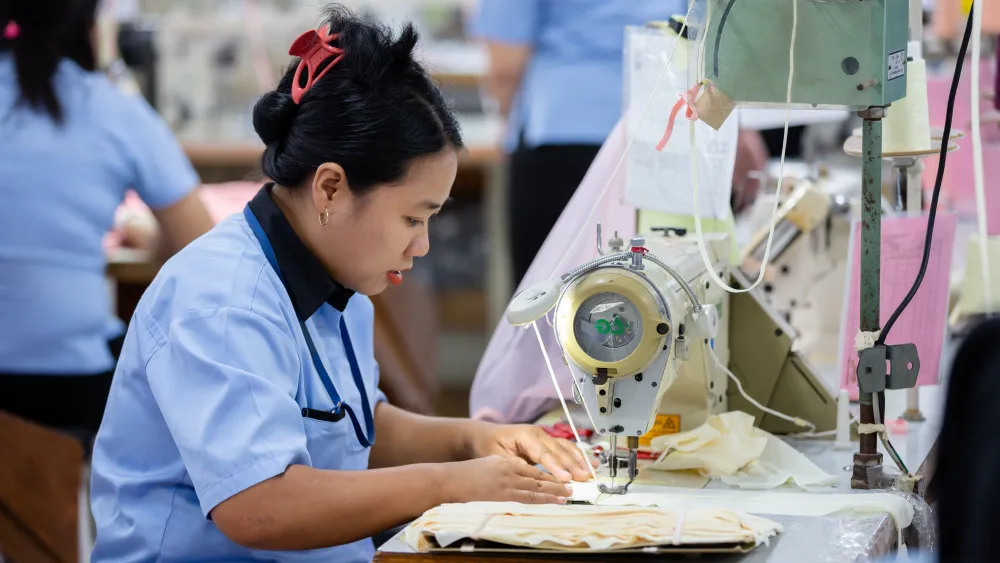
Female garment worker from Indonesia

Social dialogue as catalyst for change in Indonesia

Training for worker representatives and management of 14 garment factories

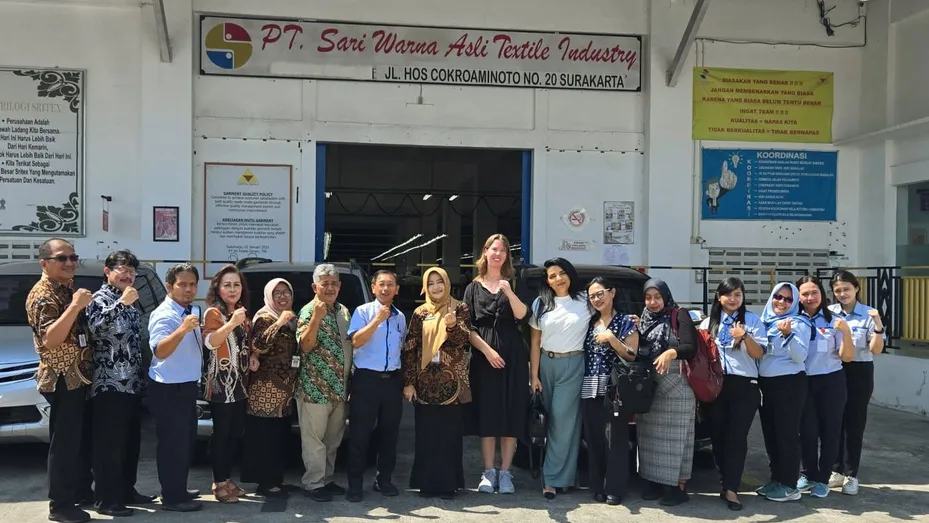
CNV Internationaal, together with CNV-trade union leader Hanane Chikhi and our local partner Yayasan Dialog Sosial (social dialogue foundation) recently organised a training in Indonesia on social dialogue and trade union freedom. Hanane exchanged her work in ports and public transport for textile factories in Indonesia for a few days. Participants in the workshops included not only worker representatives, but also the management of 14 garment factories.

Indonesia training social dialogue CNV

Purpose of the training

We already have many years of experience conducting social dialogue trainings in Africa, Asia and Latin America. These trainings go beyond just teaching negotiation skills to both employees and employers. The ultimate goal is to strengthen communication between employers and employees in a safe training environment. Based on that, they can take follow-up steps, such as negotiating collective agreements that are embedded by improved working conditions.

Fear

The training was held in Central Java, a region of Indonesia where union presence in garment factories is still minimal. More and more brands are moving their production from West Java to Central Java. Unfortunately, this is not happening because of better conditions, but because wages are lower there. The fear of joining or forming a union prevails here: Many workers dare not join or form a union for fear of losing their jobs.

But, without unions, there are no collective bargaining agreements. Therefore, problems such as extreme heat in factories, lack of job security or failure to pay severance pay often remain unresolved. As a result, workers become increasingly vulnerable.
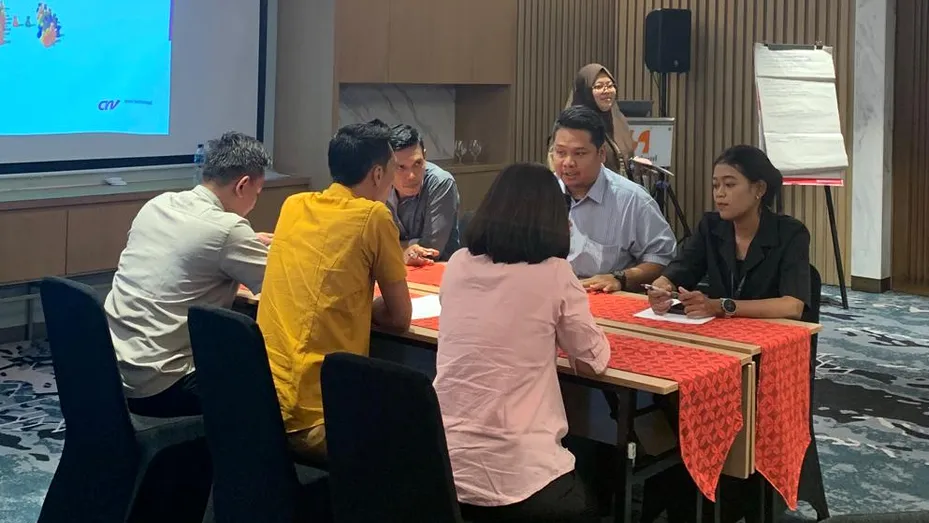
Indonesia, training social dialogue trade unions and company representatives

Finding a Voice: Hanane’s Experience in Indonesia

It was a first for Hanane Chikhi. For the first time, she travelled to Indonesia as a union executive to facilitate a training. What were her impressions?

“What struck me most was how large the gap still is between employers and their employees. In my sectors — Ports and Public Transport — I am used to people speaking out, sometimes loudly and without restraint, when they disagree. The union is an established actor there. Workers know how to participate and advocate for themselves. In Indonesia, this is clearly different.”

“During the training, I noticed that many workers are still reluctant to raise concerns or ask critical questions of management. This reluctance comes from a combination of fear and a lack of experience with structured dialogue. At the same time, the desire to be heard is very real. Workers want better conditions, more security and fair treatment, but often do not know where or how to begin.”

“It made me realise how important it is to invest in basic skills such as negotiating, communicating and building trust. The training offered a first, safe space to practise dialogue on an equal footing. For many participants, it was literally the first time they spoke directly with management representatives about shared workplace issues. That first step, however small, is essential.”

“As a union executive, it was both inspiring and confronting to see how much potential there is, but also how many steps are still needed to achieve genuine trade union freedom and structural dialogue. I hope this training helped participants take that first step. Especially where trade union freedom is under pressure, even a small step can make a significant difference.”

Intensive union work

Trade union work in Indonesia is high demanding. There is no such thing as an industry collective bargaining agreement; each factory must negotiate and register its own collective bargaining agreement. To facilitate this process, CNV Internationaal and CNV have developed with local unions the concept of the "multi-company" CBA: A CBA for more companies in the same industry and region, a successful way to make more impact. The video below shows how.

Watch our video to learn more

Challenges in Indonesia’s Textile Industry - Ensuring solutions with suppliers, brands and unions